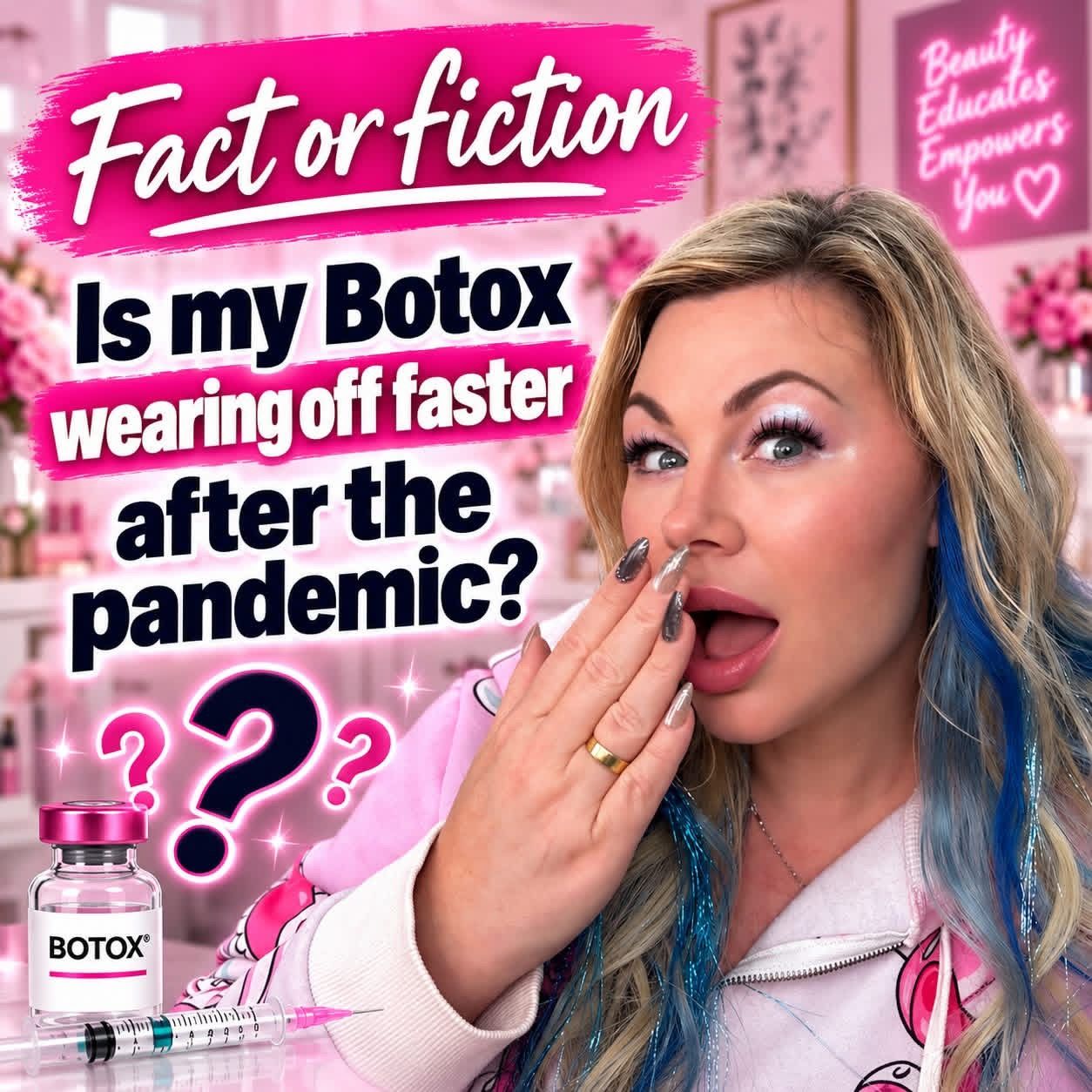
WHY IS MY BOTOX WEARING OFF SO FAST?
What the research actually says about shorter-lasting toxin
If you feel like your Botox just doesn't last the way it used to, you are definitely not the only person asking this question.
And, of course, the internet has theories.
"You have a fast metabolism." "You work out too much." "You've become immune to Botox." "It happened after COVID." "You need to take zinc."
But I wanted to know what the actual research says. So I went digging.
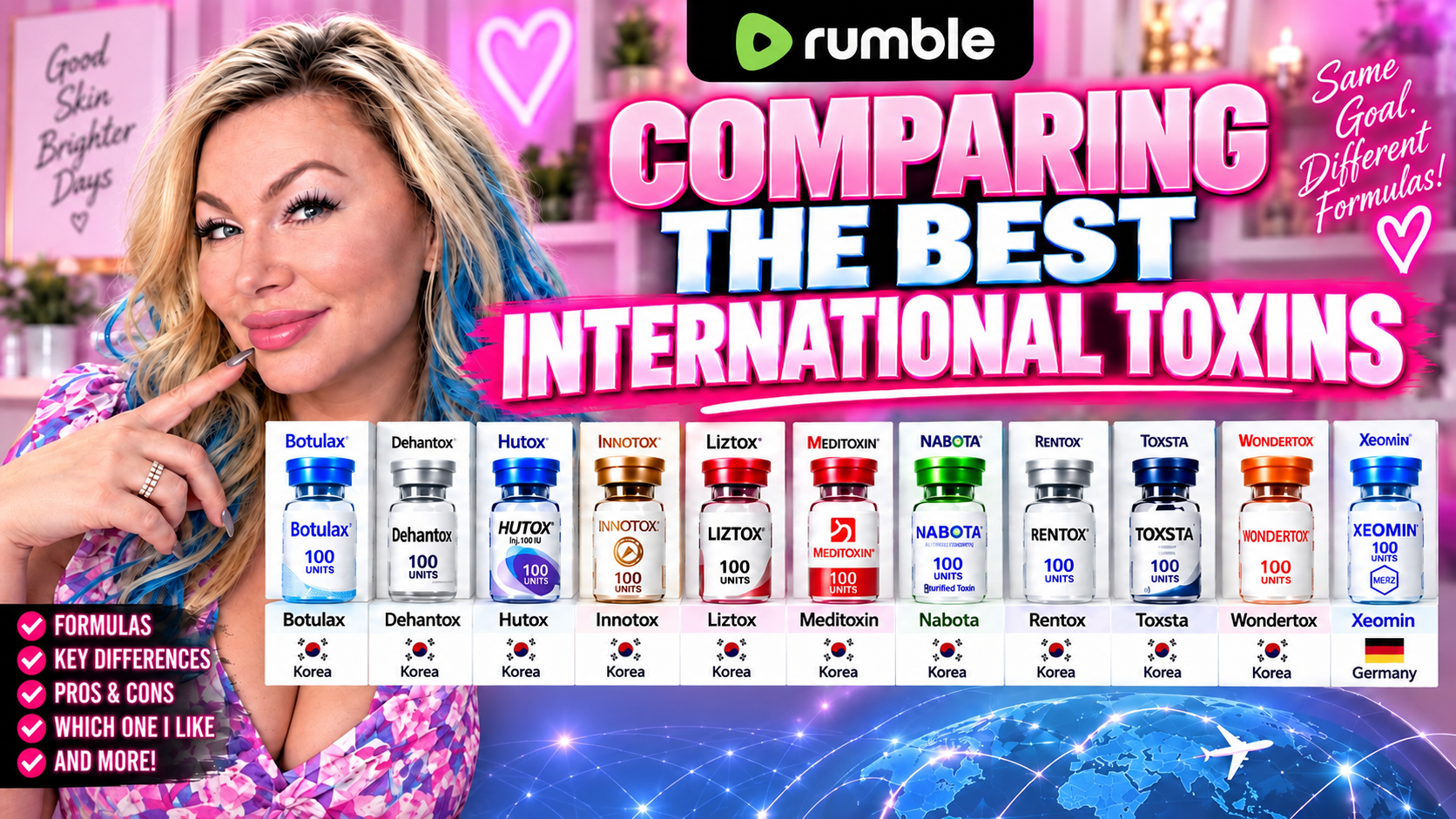
First, a little terminology. I'm using Botox conversationally because that's what most of us call wrinkle-relaxing injections, but Botox is actually the brand name for onabotulinumtoxinA. Other botulinum toxin products are different formulations, and their units should not automatically be treated as interchangeable.
And it turns out there are several legitimate reasons a toxin treatment might not seem to last as long as it once did.
First: What does 'wearing off' actually mean?
Getting some movement back is not necessarily the same thing as the toxin completely wearing off.
Botulinum toxin temporarily reduces the ability of a treated muscle to contract by interfering with acetylcholine release at the neuromuscular junction. Over time, neuromuscular function recovers.
is not the same endpoint as
"The toxin has completely stopped having a noticeable effect."That distinction matters when we compare how long our treatments last. Clinical-trial data support effects lasting several months for standard aesthetic treatment, but that does not mean every person should expect exactly four months of zero movement.
Reason #1: Dose matters - a LOT.
This is probably one of the least exciting explanations, but it has some of the strongest evidence.
Dose-ranging research has repeatedly found a relationship between botulinum toxin dose and duration. Higher studied doses can produce longer-lasting effects than lower doses.
'Jessica told me to inject 80 units into my 11s!'
NO. ■The important takeaway is simply that dose affects duration.
This is particularly interesting because aesthetic trends have moved toward lighter treatments - 'Baby Botox,' 'sprinkles,' 'micro Botox,' etc. - because many people want movement rather than a completely frozen appearance.
There is absolutely nothing wrong with wanting that look. But we also can't necessarily use a very conservative dose and then expect the longevity seen in studies using full treatment doses.
Reason #2: Your muscles are YOUR muscles.
We don't all have identical facial muscles.
Think about two people getting toxin in their masseters. One person may have relatively small masseters while another has spent 20 years clenching their jaw and has huge, powerful muscles.
Giving those two people the exact same treatment and expecting identical results doesn't make much sense.
Muscle size, strength, contraction patterns and anatomy can all influence treatment planning.
'I have a fast metabolism, so I burn through Botox.'
Maybe - but I wouldn't state it that way.
I could not find strong evidence establishing that someone's general metabolic rate simply 'metabolizes Botox away' faster.
What I DID find was much more interesting.
Reason #3: Exercise may actually matter.
This surprised me.
Because this is one of those things I've heard repeated forever: 'People who work out a lot burn through their Botox.'
A 2023 controlled clinical trial divided 60 women into low-, moderate- and high-physical-activity groups. Everyone received standardized onabotulinumtoxinA treatment of the frontalis, corrugators and procerus.
And the researchers didn't just ask whether people thought their Botox was wearing off. They measured muscle activity using electromyography (EMG) in addition to aesthetic assessment scales.
The high-physical-activity group demonstrated less durable aesthetic effects, while the low-activity group maintained greater reductions in muscle activity over follow-up.
But it does provide evidence that high levels of physical activity may be associated with shorter aesthetic durability.
Reason #4: Technique and treatment plan matter.
Before deciding that your body has suddenly become resistant to Botox, you also have to consider the treatment itself.
Did the injector change?
Were different muscles treated?
Was the placement different?
Are you using a different toxin formulation?
Are you intentionally being treated more conservatively?
These things can change what you see in the mirror.
And this is especially important if you've switched brands. The different botulinum toxin products are not simply interchangeable unit-for-unit.
Reason #5: Yes, you actually CAN develop antibodies.
This is the one everybody wants to talk about: 'Am I immune to Botox?!'
It is biologically possible. Because botulinum neurotoxin is a protein, the immune system can potentially develop neutralizing antibodies against it.
If those antibodies interfere with the toxin's biological activity, someone who previously responded to treatment can develop what's called secondary nonresponse.
It appears to be uncommon.
A large meta-analysis evaluated 5,876 people with antibody results following onabotulinumtoxinA treatment across therapeutic and aesthetic indications.
Only 27 people - 0.5% - developed neutralizing antibodies. And only five of those people were considered secondary nonresponders.
'OMG, I'm immune to Botox!'
True resistance becomes much more interesting when there is a pattern such as:
BUT... our toxin habits have changed.
Years ago, an aesthetic toxin patient might have treated their 11s a few times per year.
Now look at what we treat: forehead, glabella, crow's feet, bunny lines, lip flip, DAO, chin, masseters, platysmal bands, neck, traps - and sometimes multiple areas throughout the year.
The total cumulative exposure can therefore be very different.
An international multidisciplinary review specifically raised concern that as aesthetic doses and cumulative exposure increase, immunogenicity may become increasingly relevant.
Reason #6: What about frequent touch-ups?
This is another reason I don't love the idea of chasing every tiny flicker of movement with another injection.
The immunogenicity literature has raised concerns about repeated exposure, higher cumulative doses and treatment patterns that increase antigen exposure.
That doesn't mean one touch-up suddenly makes you resistant. It doesn't.
Reason #7: The COVID question
Okay. This one is going to get me in trouble no matter how carefully I explain it. ■
But there IS published research looking at this, so we're going to talk about it.
A 2025 observational paper evaluated 1,298 established patients receiving 4,583 treatments with botulinum toxin during 2020 and 2021.
The researchers reported more patients experiencing decreased treatment duration in the 2021 cohort and investigated changes occurring during the SARS-CoV-2 pandemic and vaccine rollout.
This was observational research. There are numerous possible confounding factors, and an association is not the same thing as causation.
But it does mean that patients who say something changed with their toxin around that time shouldn't automatically be dismissed as imagining it. There's enough of a signal to justify additional research.
Proven? No.
And that is exactly where I'm leaving that one until we have better data.Reason #8: And then there's zinc...
Another internet favorite: 'Take zinc before Botox and it'll last longer!'
Believe it or not, this one didn't come completely out of nowhere either.
A small double-blind, placebo-controlled crossover study included 77 patients receiving botulinum toxin for several indications.
Participants receiving 50 mg zinc citrate plus phytase experienced an average increase in reported toxin duration of nearly 30%, and 84% reported increased toxin effect.
Hold your horses.
This was a small pilot study. It studied zinc WITH phytase. It does not establish that everybody should start taking high-dose zinc before Botox.
And more is definitely not always better with supplements. Excessive zinc intake can cause problems of its own, including copper deficiency.
So... why is YOUR Botox wearing off faster?
If I were investigating this question, I would work through the boring explanations before jumping to the exotic ones.
Did my treatment pattern change?
Did I switch toxin products?
Am I intentionally being treated more conservatively?
Are these particularly large or active muscles?
Has my physical activity changed?
Am I actually losing the entire treatment effect, or am I simply noticing the first return of movement?
And only after considering those things would I start seriously wondering about true secondary resistance.
My biggest takeaway
I think we need to stop treating 'My Botox doesn't last as long anymore' as though it has one universal explanation.
Dose matters. Muscle activity matters. Treatment technique and planning matter. Physical activity might matter. Neutralizing antibodies can matter in a small subset of patients. Zinc is intriguing but far from settled. And the COVID-era duration signal is interesting but absolutely not proof of causation.
And it definitely isn't automatically 'you're immune.'
Like almost everything else in aesthetics, it's more complicated than TikTok makes it sound. ■
Sources & Further Reading
- Jankovic J, et al. (2023). Neutralizing Antibody Formation with OnabotulinumtoxinA (BOTOX) Treatment from Global Registration Studies across Multiple Indications: A Meta-Analysis. PMID: 37235376.
https://pubmed.ncbi.nlm.nih.gov/37235376/ - Morhy SS, et al. (2023). Controlled clinical research examining physical activity and durability of onabotulinumtoxinA aesthetic effects. PMID: 37505732.
https://pubmed.ncbi.nlm.nih.gov/37505732/ - Ho WWS, et al. (2022). International multidisciplinary review/consensus concerning botulinum neurotoxin A resistance and immunogenicity. PMID: 35747253.
https://pubmed.ncbi.nlm.nih.gov/35747253/ - Koshy JC, et al. (2012). Effect of dietary zinc and phytase supplementation on botulinum toxin treatments. PMID: 22453589.
https://pubmed.ncbi.nlm.nih.gov/22453589/ - Stengel G, Stengel C. (2025). Observational research on botulinum toxin efficacy/duration during the COVID-19 era. PMID: 40627796.
https://pubmed.ncbi.nlm.nih.gov/40627796/ - OnabotulinumtoxinA dose/duration research in aesthetic treatment. PMID: 35704394.
https://pubmed.ncbi.nlm.nih.gov/35704394/ - Review of onabotulinumtoxinA aesthetic dosing and duration. PMID: 40285447.
https://pubmed.ncbi.nlm.nih.gov/40285447/
Safety & Disclaimer
This article is for education and discussion and is not medical advice. Botulinum toxin is a prescription medication and should be discussed with an appropriately licensed healthcare professional.
Some favorite toxins include:
Get Dehantox Here:
https://www.acecosm.com/search?q=dehantox&type=product&product_cat=all
*Code Jessica10 saves you Money (Note code Jessica10 is an affiliate code)
Get Wondertox here:
https://www.acecosm.com/search?q=wonder&type=product
*Code Jessica10 saves you money (note code Jessica10 is an affiliate code)
Get Xeomin here:
https://www.acecosm.com/categories/botulinum-toxins/set-xeomin-100u-saline-20ml
*Code Jessica10 saves you money (note code Jessica10 is an affiliate code)
Get Toxsta here:
https://www.acecosm.com/categories/botulinum-toxins/set-toxsta-100u-saline-20ml
*Code Jessica10 saves you money (note code Jessica10 is an affiliate code)
Get other toxins here:
https://www.acecosm.com/categories/botulinum-toxins
*Code Jessica10 saves you money (note code Jessica10 is an affiliate code)