What Determines a Vascular Occlusion Risk?

Jessica Cameron • October 7, 2026
WANNABE BEAUTY GURU
EDUCATIONAL ARTICLE

Does Cross-Linked Automatically Mean Vascular Occlusion Risk?

Okay friends, let's talk about something I see getting confused all the time in DIY aesthetics:

If a product contains something that is cross-linked, does that automatically mean it has a vascular occlusion risk?

The short answer is: not necessarily. And the reason is that cross-linked describes something about the chemistry of an ingredient. It does not, by itself, tell us exactly how the finished injectable product is going to behave inside a blood vessel.

Why do we associate cross-linking with vascular occlusion?

Most of us learned about cross-linking through traditional hyaluronic acid dermal fillers.

HA naturally breaks down relatively quickly. Manufacturers can chemically connect - or cross-link - HA chains to create a three-dimensional network that lasts longer and can form a more substantial gel.

That is incredibly useful when we're trying to create volume, projection or structural support.

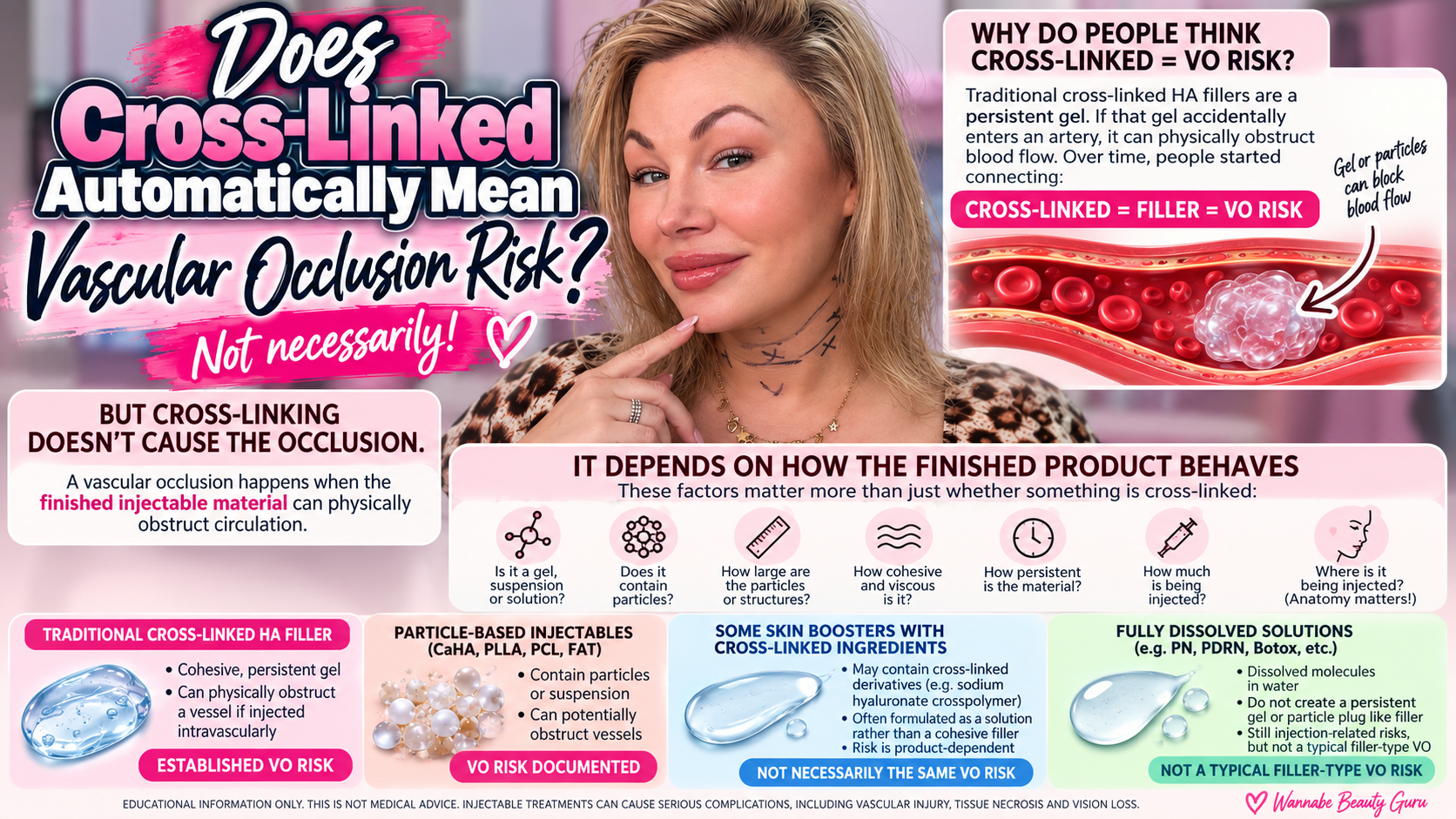
But it also means that traditional cross-linked HA filler is a persistent gel. If that gel is accidentally injected into an artery, it can physically obstruct blood flow. That's a vascular occlusion, or VO.

So over time, people started making this mental connection:

CROSS-LINKED = FILLER = VO RISK

I completely understand why. But scientifically, that's too simplistic.

Cross-linking isn't what actually causes the occlusion

This is the part I really want everyone to understand.

A vascular occlusion isn't happening simply because a molecule has been cross-linked.

The problem is whether the finished injectable material can physically obstruct circulation if it accidentally gets into a blood vessel.

Think about an artery like a tiny pipe. If you accidentally put a persistent gel or particles into that pipe and they can't pass through it, they can create a blockage. Blood can't adequately reach the tissue downstream. That's the problem.

So instead of only asking, "Is anything in this product cross-linked?" I think the better question is:

"What would this finished product actually do if it accidentally entered an artery?"

There are a lot more factors involved

When I'm researching an injectable, I want to know much more than whether the word cross-linked appears somewhere on the ingredient list.

I want to know: Is it a gel, suspension or true solution? Does it contain particles? How large are those particles or structures? How cohesive is the material? How viscous is it? Does it stay together or disperse? How concentrated is the material? How much is being injected? How much pressure is required to inject it? And, of course, where is it being injected?

Anatomy matters enormously. Vessel size and vascular connections vary throughout the face, and some areas have particularly important connections to the ophthalmic circulation.

That's why the same conversation can't simply be reduced to:

Cross-linked = VO.

"Contains cross-linked HA" does NOT necessarily mean "cross-linked HA filler"

This distinction is especially important with some of the Korean skin boosters we talk about.

A product can contain an HA-related ingredient - including a cross-linked HA derivative - without necessarily being the same type of cohesive HA gel that we use as traditional dermal filler.

For example, Hanheal PDRN lists several forms of HA among its ingredients, including sodium hyaluronate crosspolymer.

That word crosspolymer immediately gets people's attention. I understand why someone might look at that and say:

"Wait! That's cross-linked HA. Doesn't that mean it has a vascular occlusion risk?"

But we need another piece of information before making that conclusion: What is the physical form of the finished product?

Hanheal PDRN is marketed by its manufacturer as an injectable solution containing PDRN, HA-related ingredients, amino acids and other components. That is very different from simply identifying the product as a traditional cohesive cross-linked HA dermal filler.

The fact that one ingredient is a cross-linked HA derivative doesn't automatically tell us that the entire finished product behaves like a syringe of dermal filler.

At the same time, I would NOT take the opposite extreme and say: "It's a skin booster, therefore vascular occlusion is impossible." We need evidence for that too.

This is why I don't love the phrase "zero VO risk"

You've probably heard me talk about products that manufacturers or sellers describe as having no vascular occlusion risk. I've become increasingly careful about how I word this.

There is an important difference between "This isn't expected to behave like a traditional filler embolus" and "It is impossible for this product to cause vascular compromise." Those aren't the same statement.

Every time we're putting a needle or cannula into vascular tissue, there are still injection-related risks. We can injure a vessel, cause bleeding or hematoma, and potentially produce other vascular effects.

So when we're specifically talking about filler-type vascular occlusion, I'm interested in whether the material itself can create a persistent mechanical obstruction.

Here's my easiest way to remember it

Instead of:

CROSS-LINKED = VO

Think:

GEL/PARTICLES + PERSISTENCE + ABILITY TO BLOCK A VESSEL = VO CONCERN

Cross-linking can absolutely contribute to those characteristics - which is exactly why conventional cross-linked HA fillers have a known vascular occlusion risk. But cross-linking is only one piece of a much bigger puzzle.

What I look for now

When I'm researching a new injectable, I don't stop when I see the words hyaluronic acid, cross-linked, PCL, PLA, PN or PDRN.

I want to understand the finished formulation.

Is this a cohesive gel? Is it particulate? Is it a suspension? Is it a completely dissolved solution? How persistent is it? Could it physically lodge inside a vessel?

Because ultimately, that's the question that matters:

If this product accidentally enters an artery, is the finished material capable of creating a persistent mechanical obstruction?

That question tells us much more than one word on an ingredient list ever could.

And friends, this is also why I think we need to be careful about automatically putting products into either the "VO risk" or "no VO risk" box based solely on an individual ingredient.

When talking about vascular occlusion risk, while it's important to understand how the ingredients and finished formulation behave, what the manufacturer has determined based on its product-specific testing and safety information should help set the standard for the precautions we take.

We should also consider the product's instructions for use, available independent evidence and regulatory guidance. Regulators such as the FDA specifically emphasize looking at the risks and labeling of the individual product, because injectable products aren't all interchangeable and their risks can differ.

In other words, I don't think we should assign a product a vascular occlusion risk simply because we recognize one ingredient on the label.

We need to look at the finished product, how it behaves, the available safety information and what the manufacturer has actually determined through its product-specific testing.

Because cross-linked does not automatically equal vascular occlusion.

- Jessica
Wannabe Beauty Guru
Educational information only. This is not medical advice or a substitute for training from a qualified medical professional. Injectable treatments can cause serious complications, including vascular injury, tissue necrosis, vision loss and stroke.
Reference: U.S. Food and Drug Administration, Dermal Fillers (Soft Tissue Fillers), accessed October 2026.
Watch Video Here
tesoro
By Jessica Cameron • October 7, 2026
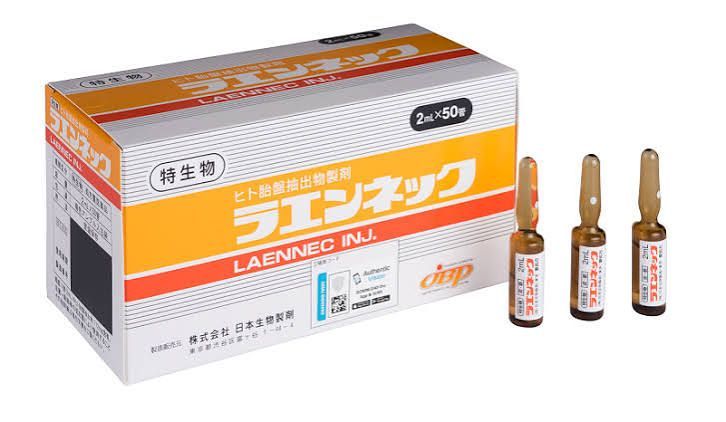
Laennec
By Jessica Cameron • September 22, 2026
Latest reseach on Laennec. What are the studies showing? Jessica Cameron deep dives into the current studies on Laennec and its benefits.
By Jessica Cameron • September 10, 2026
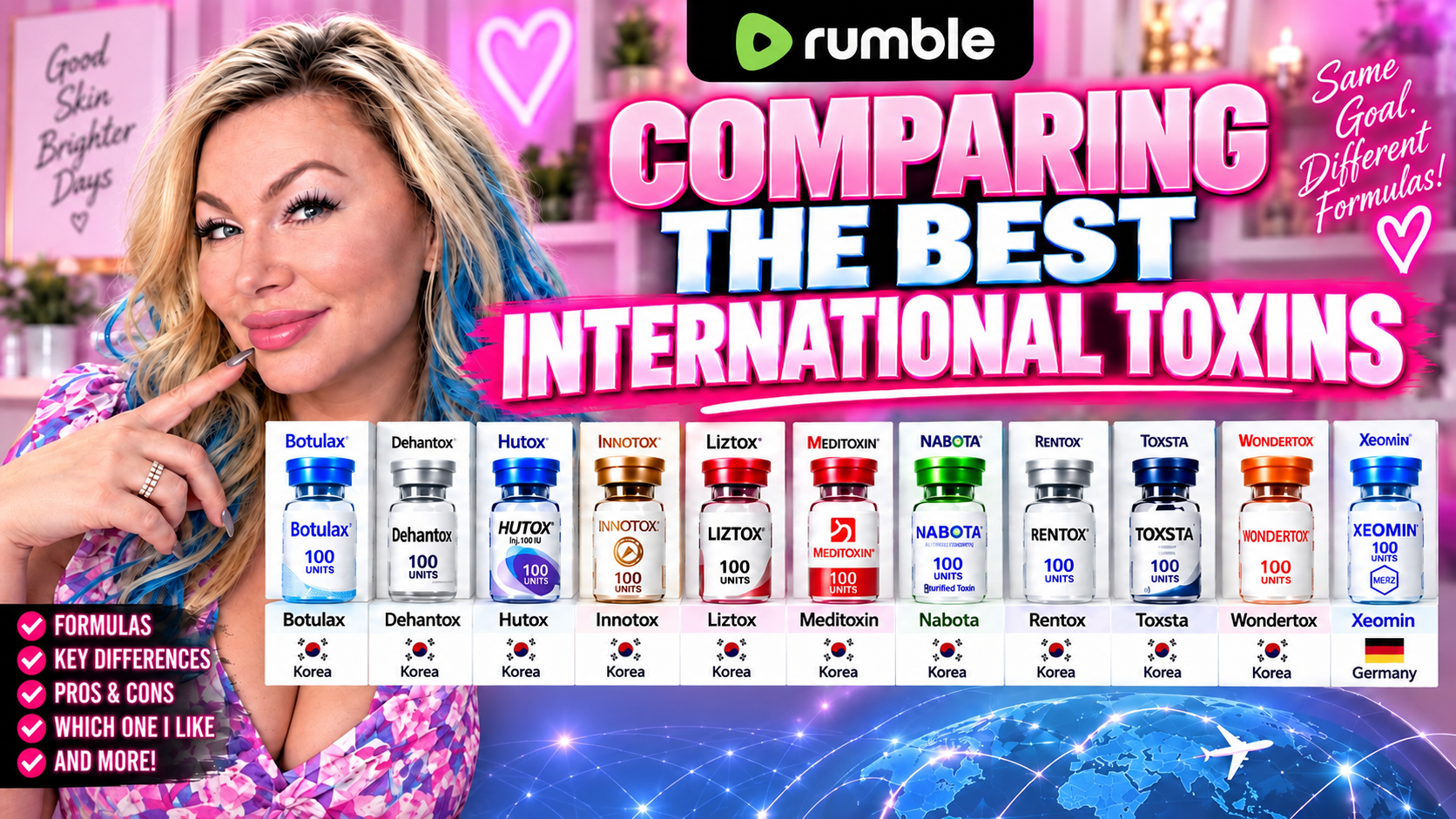
See the video on how I compare all the Toxins available on the International market.
By Jessica Cameron • July 5, 2026
Hot enough for ya? I heard Satan’s in Iceland on a skiing vacation, and who could blame him? And here you are, on Jessica’s blog, looking for some scorching deals. Well, we’re here for you.
By Jessica Cameron • May 8, 2026
MOTHER'S DAY SALE AT ACECOSM.COM
By Jessica Cameron • November 23, 2025
By Thyla Scenester
By Jessica Cameron • September 14, 2025
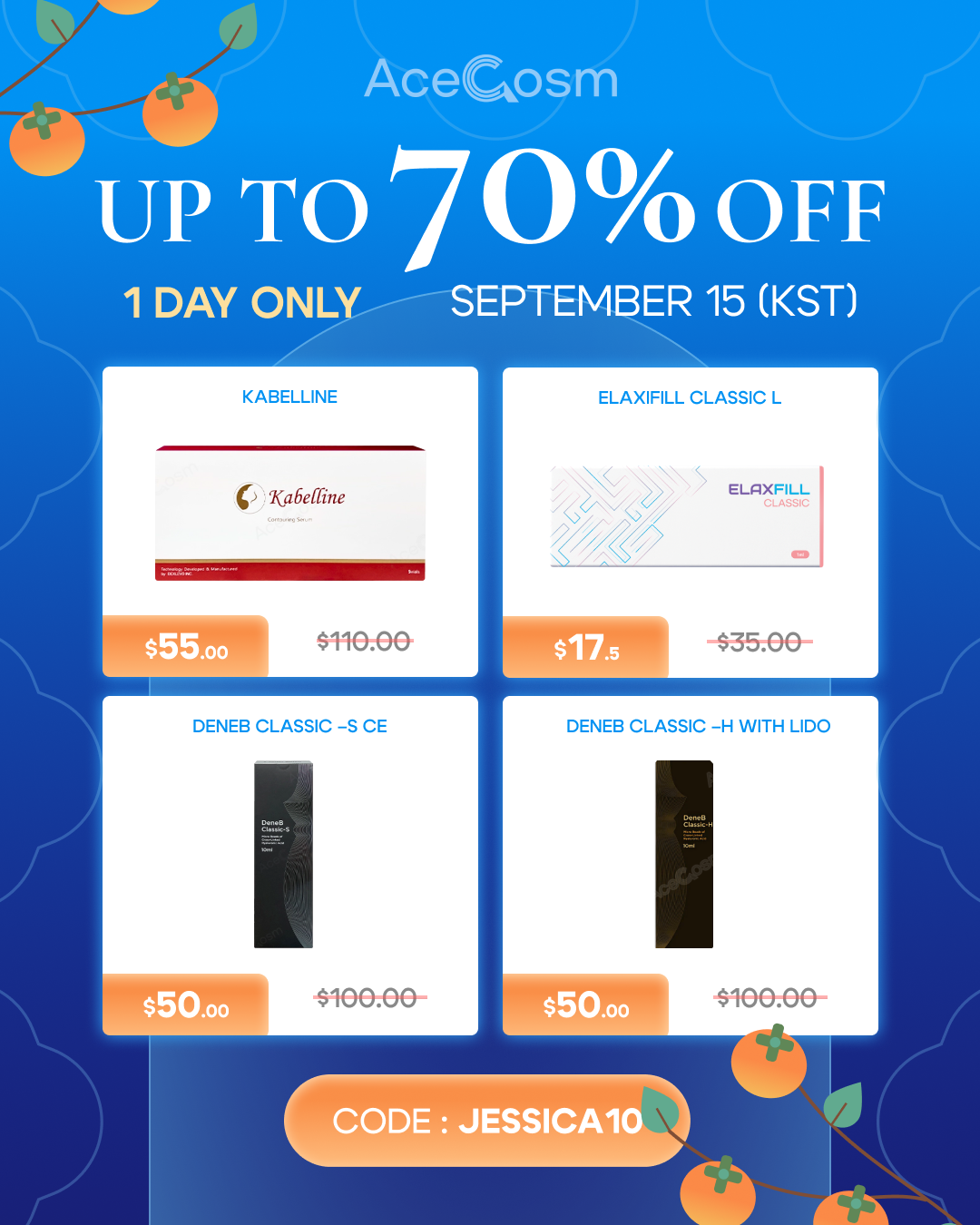
Sunday is the big KOREAN THANKSGIVING SALE AT ACECOSM.COM !
By Jessica Cameron • November 24, 2024
It's Black Friday, bitches!
By Jessica Cameron • December 4, 2023
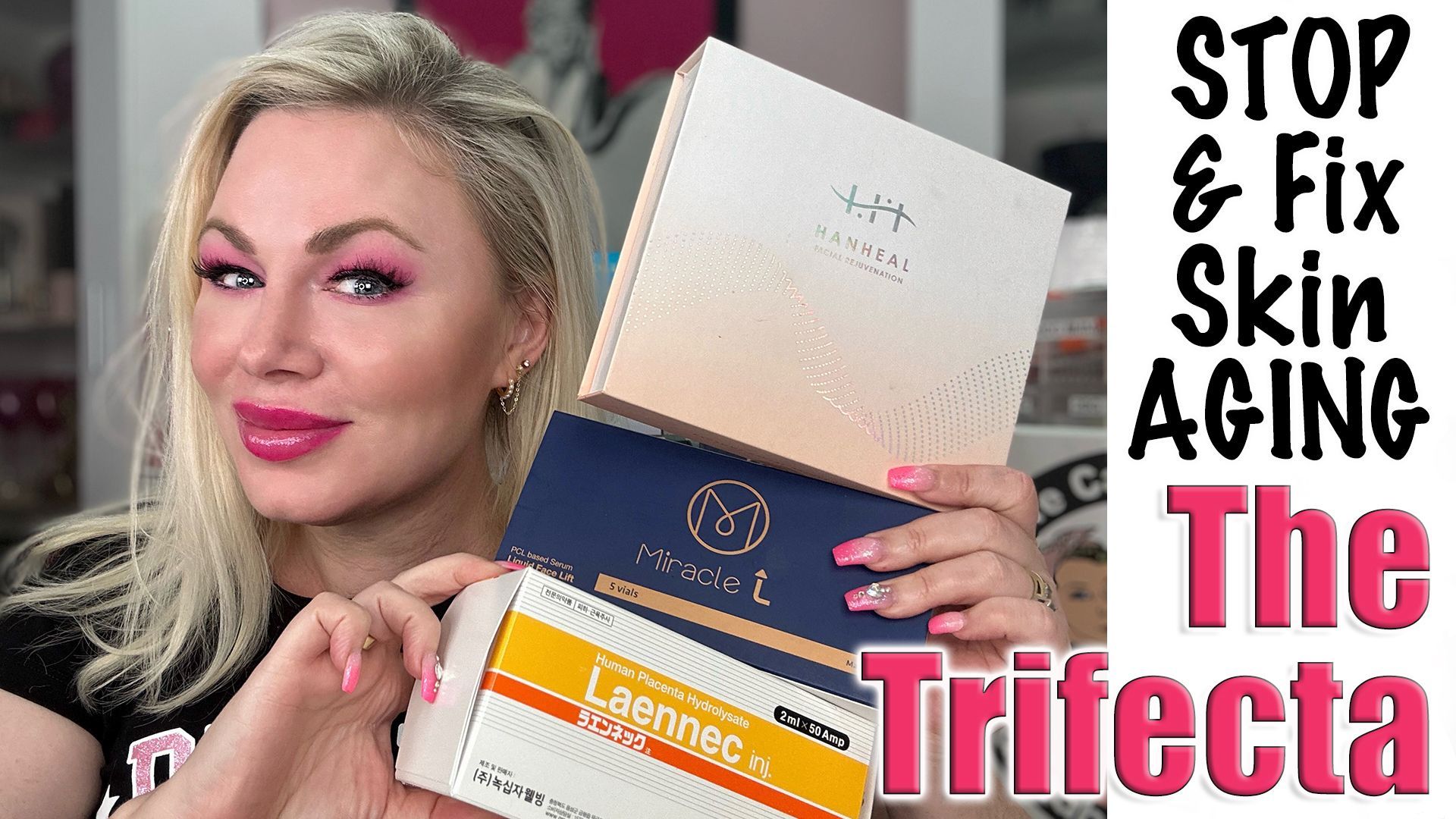
The Problem Mature skin (and that is technically defined as over the age of 35) often needs SIGNIFICANT help, we loose collagen by approx. 1-2% each year after the age of 25 and life style factors, diet, genetics can make it even worse. In addition to loosing collagen after the age of 25 the skin metabolism slows down. This causes the skin to become gradually drier and less elastic over time. The barrier function is weakened, contributing to a loss of moisture. My neck has been the hardest area for me to treat. In fact I honestly don't remember when my neck skin looked good prior to starting DIY skin care, even when I was young. It took years of trial an error to discover the right treatments that were the best priced and also the most effective. It is my hope that you can benefit from my years of trial and error. I Present to you the Trifecta ! The Plan For this treatment plan I recommend alternating each of the products every 10 days (provided that you have no swelling, inflammation, or irritation). The products I use and recommend are Miracle L (I prefer with a lidocaine kiss , more on that below), Hanheal Exosomes and Laennec . But I do think you could sub out different brands of the same product categories if you wanted to. The active ingredients are what matters the most - these are just the best priced products that I find give the best results :) I made a video detailing this plan, you can watch it here: https://rumble.com/v3v5i7o-stop-and-fix-aging-skin-with-the-trifecta-how-liquid-pcl-exosomes-and-place.html The Products Hanheal Exosomes Exosomes help damaged cells heal faster by enabling damaged cells to communicate with healthy cells, which is great for repairing mature skin. Hanheal Exosomes are also packed with other skin healing and helping ingredients including (but not limited to): * PDRN which stands for Polydeoxyribonucleotide , a covalent bond molecule created using salmon DNA fragments. These molecules carry the remarkable ability to stimulate cell growth in tissues and speed up wound healing, therefore improving the physiological condition and elasticity of the skin, leaving it healthy and natural. * Hydrolyzed collagen promotes the synthesis of new collagen in the skin and joints. * Copper Tri-Peptide-1, is a naturally occurring peptide found in the human body which possesses powerful regenerative properties, it has been extensively studied for its ability to stimulate collagen production, promote wound healing, and support tissue remodeling. * Sodium Hyaluronate is a form of hyaluronic acid that can enter the deep layers of your skin. Here, it attracts moisture and reduces inflammation, while improving hydration. It helps with soft tissue growth, prompts your body to make more collagen and elastin, keeps your skin moisturized, prevents tightness, boots elasticity, and reduces scarring. I have chosen to highlight only a few of the amazing ingredients here, will make another blog just on this product to share it in greater detail. I get my Hanheal Exosomes at AceCosm here: https://www.acecosm.com/categories/skin-booster/hanheal_exosome ***Code Jessica10 saves you Money :) Hanheal Exosomes videos can be found on my website free to watch here: https://www.wannabebeautyguru.com/exosome-videos My Hanheal Exosome videos can also be found on rumble and bitchute, just search " Wannabe Beauty Guru " and " Hanheal Exosome " Miracle L Miracle L is a Liquid PCL product that comes mixed in a glass vial. Now this product is quite thick and most prefer to fill a syringe with a large needle (23g) then switch out to a smaller meso tip for injection (27g or 29g). This is 20% Liquid PCL (polycaprolactone) which spreads out and builds collagen for 2+ years while your body breaks it down. The collagen restores natural volume, correction of scars after acne, improvement of skin tone, improve Age-related changes in the eye area, correct wrinkles and restores skin structure. Typically 3-5 treatments are needed to see improvement, and some areas might require more. My face only needed 3 treatments while my neck needed 8. Since it takes 2 years to break down it can cause bruises to become trapped if a blood vessel is hit. I recommend practicing your placement with other products prior to figure out your placement/ depth to ensure you don't bruise while using this product or you can use a cannula. I prefer using the Iniblanc technique for the face, while the chest and neck I do a traditional meso therapy technique. I get my Miracle L at AceCosm here https://www.acecosm.com/categories/skin-booster/miracle ***Code Jessica10 saves you Money :) My Miracle L videos can be found on my website free to watch here: https://www.wannabebeautyguru.com/liquid-pcl My Miracle L videos can also be found on rumble and bitchute, just search " Wannabe Beauty Guru " and " Miracle L " Laennec Laennec is a very popular placenta product that has been studied and used for a wide variety of health concerns. Laennec helps to rejuvenate and regenerate the skin and soft tissue of the body, also successfully copes with rashes and minor dermatological problems. It helps with acne treatment, baldness treatment, treatment of age-related hyperpigmentation, for preparation and in the process of rehabilitation during plastic surgery, to prepare for contour plastic, and to accelerate rehabilitation processes during deep peeling and laser resurfacing. Has been studied to reduce fatigue, and aid in general health. Laennec improves soft tissue, cartilage and join tissue damage, it helps to improve symptoms related to menopause, peri menopause and post menopause. Most people do swell with this product so a traditional meso technique is advised. The Bap technique can/ will make you swell more. I get my Laennec at AceCosm https://www.acecosm.com/categories/skin-booster/laennec ***Code Jessica10 saves you Money :) My Laennec videos can be found on my website free to watch here: https://www.wannabebeautyguru.com/human-placenta ***I organized them by treatment locations My Laennec videos can also be found on rumble and bitchute, just search " Wannabe Beauty Guru " and " Laennec " The Dose For areas needing significant improvement alternating each product every 10 days is ideal, provided that there is no swelling. inflammation. If there is a reaction of any type then treatments should be paused till they are fully healed, this is true for all treatments. I alternate using 1 full vial of Laennec (2ml) , 1 full vial of Miracle L (2 ml, with a Lidocaine Kiss $0.20, see next point), and 2-3 mls of Hanheal Exosomes (mixed) . This means you will have left over Hanheal Exosomes, and manufacturers would say to discard after use. However I typically store in the fridge and remix (give a good shake) and try to use within a week. You can also micro-needle this product, or treat other areas with it. Recommendations and what NOT to DO! Do NOT use these products together, do NOT mix these products. These ingredients are amazing but each can be temperamental so best to use each by itself and wait 10 days before using another product in the same area. I recommend testing each product 48 hours before a full treatment in a place like by your ear to see if you have a reaction. I have a video to help you wit that in case you have questions https://rumble.com/v18i6uo-how-to-do-a-test-patch-where-how-and-why-code-jessica10-saves-you-money-at-.html I recommend that you test these out when if you have a reaction its not a big deal. What does that mean? Well if you work Mon- Friday, testing the product Friday early evening or Saturday morning is best, this way if you have a reaction you can allow the skin to settle in the comfort of your own home. If you are concerned for a reaction start with half the recommended dose - this will allow you skin to get adjusted to the products and while the benefits will be slower, any side effects will be less I recommend that you research each of these items before you purchase them. Heres some videos to help. Exosome Technology: Everything YOU Need to know https://rumble.com/v1btoox-exosome-technology-what-you-need-to-know-code-jessica10-saves-you-money-at-.html Miracle L and H: Tips and Tricks https://rumble.com/v28qol6-miracle-l-and-h-tips-and-tricks-liquid-pcl-code-jessica10-saves-you-money-a.html The Best Placenta Product for You https://rumble.com/v2do6qs-the-best-placenta-product-for-you-laennecmelsmon-curacen-code-jessica10-sav.html Which Product to Start? You can start with any of them first, but I do recommend trying to stay consistent with the order. As always make this work for your schedule, I think Laennec causes temporary swelling on many people, Miracle L sometimes does too but so long as you don’t do it too closely together is less likely to. Hanheal Exosomes are the least likely to cause swelling, tho I do get red for a few hours.. I do not recommend you do any of the treatments the day of an important work event or life goal. Since risk of swelling (especially in the beginning) is common, I would try these each first when you have a day or two in which if you swell its not a huge deal. This might mean that you have to wait longer between treatments - that is ok. Make your treatments work WITHIN your schedule. That is one of the beautiful aspects of DIY Skin Care. Lidocaine Kiss I prefer to give my Miracle L a Lidocaine Kiss , but if you are new here let me explain to you what that means. That means that I add 0.1ml of liquid lidocaine to the 2ml vial of Miracle L . I then swirl the Miracle L vial around allowing the product to mix. This takes away the pinch of Miracle L and it’s easy. You can get your Lidocaine here: https://www.acecosm.com/categories/numbing-creams/lidocaine_hcl_2_ ***Code Jessica10 saves you Money :) Watch me do it in this video: https://rumble.com/v3swwfj-how-i-build-collagen-in-the-temporal-area-with-miracle-l-acecosm-code-jessi.html Note: I do recommend doing your own research on lidocaine and only using a very small amount as needed. You do not need much to make a big impact with lidocaine and too much can have unpleasant side effects. Also note: I store any unused product in the fridge once its opened. Cost Obviously the cost of doing this frequency of treatments in the USA would be very high, we are blessed to be able to do these treatments in the comfort of our home also saving us time and gas money. But let’s still break down the actual out of pocket cost. If your alternating 1 -2 vials of Laennec , 1 mixed vial of Hanheal Exosomes and 1 vial of Miracle L every 10 days this will cost less than $100 a month! Most will need 3-6 months of improvement but it’s amazing I promise. Let me show you the math! 1 full vial of Laennec (2ml, $7.60 per 2ml vial, assuming you buy the 50 vial pack) 1 full vial of Miracle L (2 ml $68, with a Lidocaine Kiss $0.20) and 2-3 mls of Hanheal Exosomes ( $4.80 per ml, so between $9.60-$14.40 per treatment ). This works out to be between $85.40-$90.20 per month BEFORE Code Jessica10 discount!! Use code Jessica10 at check out and it will be ever cheaper!!!! My Results My neck made great improvements!!! In fact its better then I have ever hoped. I do think patience is key, but all my friends who have tried this method have noticed a remarkable improvement in about 3 full rounds or 3 months if you are able to adhere to my schedule detailed above. Common Questions Question: If I can only stick to treatments every 7 or 14 days due to work commitments which would you do? Answer: Since these products can cause swelling, and if you treat an area with swelling you can trigger compound swelling I think every 14 days is safer for most. Question: Can I substitute a different brand instead of the ones recommended? Answer: You can! But I have tried all the brands and these work the best and are also the best price. But use your preference, don’t forget to use code Jessica10 to save money ;) Question: You have said most people only need 3-5 rounds of Liquid PCL per area, every other year. What do I use once I no longer need Liquid PCL? Answer: I would replace that step with a PDRN Or PN product. These are regenerative and healing and will help keep your skin looking its best. A thinner Pdrn I love is Hanheal PDRN : https://www.acecosm.com/categories/skin-booster/hanheal_pdrn_booster ***Code Jessica10 saves you Money :) A thicker PN I love is Elaxen PN : https://www.acecosm.com/categories/skin-booster/elaxen_pn ***Code Jessica10 saves you Money :) I can not wait to see your results, feel free to share them in the group. As always any questions with this process or ordering from my approved vendors you can find me live EVERYDAY on Youtube or Rumble (listed in my priority links, listed below), and you can email me at jessicajlcameron@yahoo.com Priority Links https://qrco.de/bdAMP3 XOXOXOOXO Jessica
By Jessica Cameron • November 10, 2023
First let me reiterate that only products that are designed/ created and intended to be placed in the skin should indeed be placed into the skin . Ingredients and products that are intended to be placed in the skin go through additional testing to ensure that for most customers there is not a major issue with the injection process. While it does still mean that someone could have an allergic reaction, that should not be common and the average consumer should not have a concern when using products that are safe to inject into the layer of the skin that the manufacturer recommends. Also reminder that it is not safe to buy any injectable from Amazon, wish, ebay, etc. Here's a video to help further explain why: https://rumble.com/v12fufh-do-not-buy-fake-products-a-rant-code-jessica10-saves-you-money-off-all-appr.html