Laennec Is Evolving
Research update: September 2026
I keep those three categories separate throughout.
First: why I care so much about Laennec
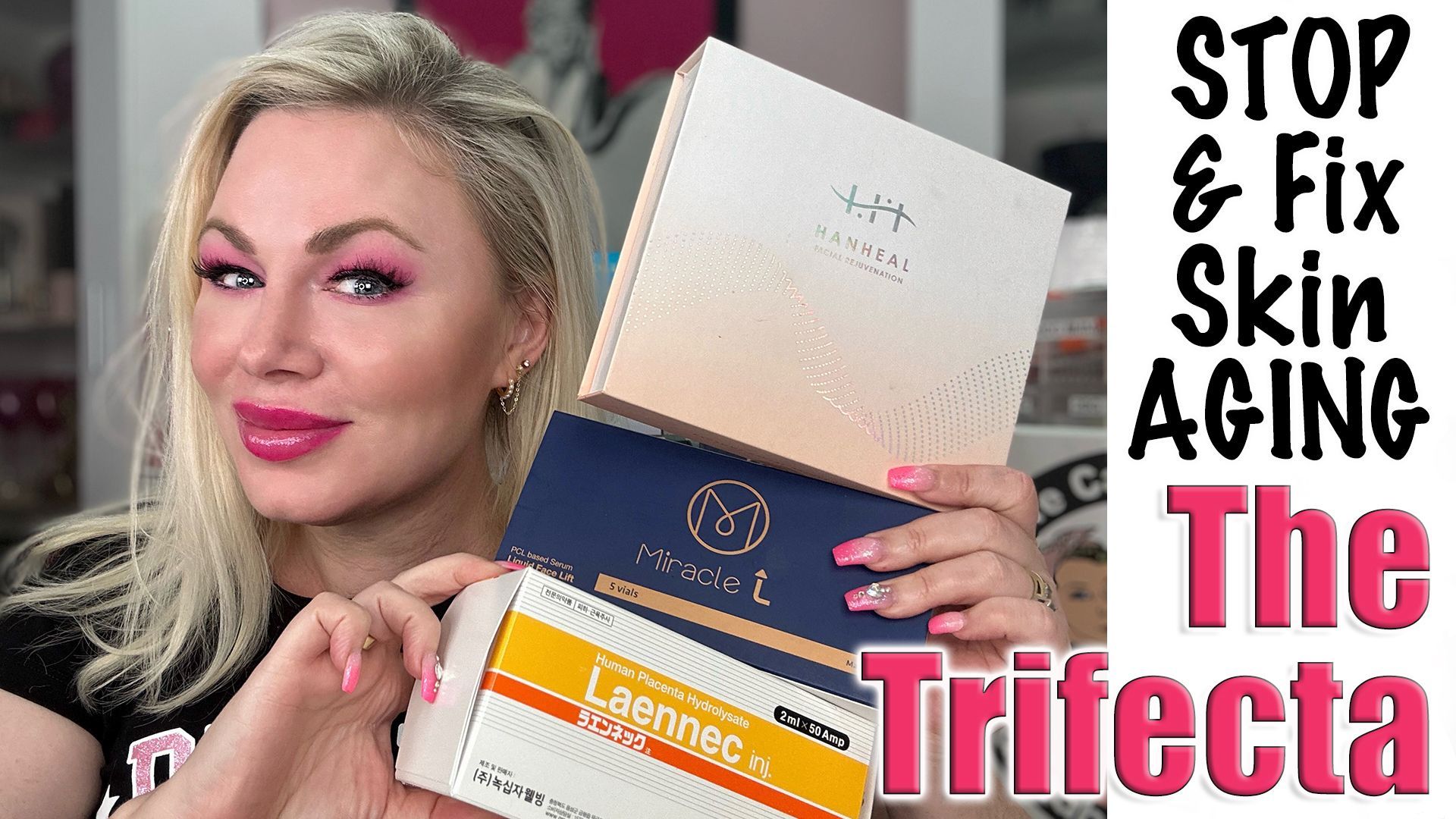
Laennec is honestly one of my favorite products. For me personally, it has been one of those products that feels useful in so many different areas of my life and recovery. I have found it helpful with symptoms I associate with perimenopause, menopause and post-menopause; I feel like I heal faster after deeper microneedling and peels; I notice benefits in my overall health, energy and sense of wellness; and I have personally experienced meaningful improvements in joint discomfort and pain.
I have even described it as helping “fix” joints that felt damaged because that is how dramatic the improvement has felt to me. But I want to be very precise: that is my personal description of my experience. It is not proof that Laennec regenerates cartilage, reverses structural joint damage, or is approved for joint repair.
There is, however, broader research on human placental extracts that makes some of these areas scientifically interesting. Randomized studies have reported improvements in menopausal/climacteric symptom scores and fatigue with human placental extracts, and a 2025 systematic review found potential benefit across randomized trials of placental extracts. Human placental hydrolysate has also been studied for pain, including a randomized shoulder-impingement trial and animal models. Those findings do not automatically prove every personal use of Laennec, and they do not prove structural joint regeneration. [13-16]
The new Phase 3 story - at a glance
What Laennec is approved for today
Laennec is a prescription human placenta hydrolysate injection. GC Wellbeing’s current Korean product information lists a 2 mL ampoule and an indication of improving liver function in patients with chronic liver disease. The listed routes are subcutaneous or intramuscular injection. [1]
So where does 10 mL IV Laennec come from?
This is not an internet rumor. GC Wellbeing sponsored a randomized, multicenter, open-label, active-controlled Phase 3 trial registered as NCT06493799. The study was designed to compare 10 mL Laennec by IV infusion with 4 mL Laennec by subcutaneous injection, administered twice weekly for six weeks, in 226 adults with chronic liver disease. [2]
The primary endpoint was the change in ALT - alanine aminotransferase - from baseline at Week 6. ALT is a liver enzyme commonly used as a marker of liver-cell injury, although a change in ALT is not the same thing as proving improvement in every aspect of liver health.
And the Phase 3 trial met its primary endpoint
On June 16, 2026, GC Wellbeing announced positive topline Phase 3 results. The company said the IV group showed a statistically significant result versus the subcutaneous group on the primary six-week ALT endpoint. Korean reporting on the announcement gave the p-value as 0.0098. [3,4]
What I still want to see are the actual ALT changes in each arm, complete adverse-event tables, serious adverse events, discontinuations, laboratory abnormalities, subgroup analyses, and the final clinical study report or peer-reviewed publication. GC said detailed results were intended for scientific meetings. [3]
Does this mean there is a new 10 mL Laennec vial?
Not necessarily. The current official Korean product page still shows a 2 mL ampoule. Phase 3 establishes a 10 mL IV dose, but it does not by itself prove that a separate commercial 10 mL Laennec vial has launched. [1,2]
This is an important distinction because “10 mL was studied” and “there is now an approved 10 mL retail vial” are two different statements. Earlier company materials discussed larger-volume development, but until an approved new product insert or label is published, I would not tell people that a standalone 10 mL commercial vial is officially available.
Why the IV route matters
The Phase 3 program is fundamentally about route and dose expansion. GC has said that larger doses are cumbersome when the product is given by repeated subcutaneous or intramuscular injections, and that an IV route could make higher-volume administration more practical in a medical setting. Company reporting has discussed administration up to 10 mL if the route is approved. [3,4]
That does not mean a person should take five 2 mL ampoules and create their own IV protocol. The clinical trial was conducted under a defined protocol with medical supervision, eligibility criteria and safety monitoring. The final approved dose, dilution, infusion time, frequency and monitoring requirements are exactly the details we need from the regulator if the label change is approved.
Is IV Laennec approved in Korea yet?
As of this September 2026 article, I have not found a public Korean product-label update showing IV administration as an approved route. GC’s August 18, 2026 announcement still said it planned to apply within the year to add the IV route, while the current product page continues to list subcutaneous and intramuscular administration. [1,7]
The 10 mL dose did not appear out of nowhere
Before Phase 3, GC ran a Phase 2 dose-ranging program registered as NCT05532124. That study enrolled 49 participants and included intravenous Laennec dose exploration, including 4 mL, 6 mL and 10 mL in the dose-escalation portion. The Phase 2 program evaluated safety/tolerability and helped establish the path toward the Phase 3 10 mL IV regimen. [5]
The development path
The newer research is getting broader - but it is still research
In August 2026, GC announced a preclinical study in an alcohol-induced fatty-liver mouse model. The company reported dose-related reductions in ALT and improvements in liver-fat accumulation, inflammation and oxidative-stress-related pathways. Interesting? Absolutely. A new approved human indication for alcoholic fatty liver? No. It was an animal study. [7]
GC also announced a 2026 Scientific Reports paper studying human placental hydrolysate in a capsaicin-induced pain model in rats. The researchers reported dose-dependent reductions in hyperalgesia, and the combination of HPH with low-dose dexamethasone produced analgesia comparable to high-dose dexamethasone in that model while reducing steroid-associated weight loss. Again, that is promising mechanistic work - not proof that Laennec is approved as a pain medication or that it “repairs” human joints. [8,15]
What about menopause, fatigue and wellness?
This is the area that is especially personal for me because I feel that Laennec has helped me tremendously through peri-menopause, menopause and post-menopause-type symptoms, as well as my overall sense of wellness.
There is broader clinical literature on human placental extracts in these areas. A randomized controlled trial in middle-aged Korean women reported improvement in menopausal symptom scores and fatigue after human placental extract treatment, and another randomized double-blind trial reported greater improvement in climacteric symptoms than placebo. A 2025 systematic review of randomized trials concluded that placental extracts appear to have potential benefits for menopausal symptoms, while also noting the variation in products and study designs. [13,14,16]
That is enough evidence for me to say the subject deserves serious research. It is not enough to say that every placental product, every dose, or Laennec specifically is proven to treat every menopause symptom. I want to keep that distinction honest.
China: real access in Hainan, but nationwide approval is different
Laennec received expedited import approval in September 2024 in the Boao Lecheng International Medical Tourism Pilot Zone in Hainan, China, and treatment began there shortly afterward. GC’s own corporate history records the September 2024 Hainan approval. [9]
That special-zone authorization is not the same as nationwide NMPA marketing approval. In April 2026, NewsPim reported that GC aimed to complete the Chinese clinical application process in 2026 and obtain NMPA approval in 2027. That is later than earlier company materials that had discussed nationwide distribution by 2026. [10,11]
For my U.S. readers: the FDA situation matters
Laennec is not FDA approved in the United States. In 2026, the FDA published a warning about unapproved products made from human cells or tissues and specifically referenced a report of a patient death after self-injection of imported Laennec. The FDA said testing of remaining samples did not isolate the pathogen associated with the patient’s death, so the warning does not establish that Laennec caused the death. The FDA nevertheless reiterated its concerns about self-administering unapproved imported human-tissue-derived products. [12]
Laennec is not an abandoned old product
One of the reasons this research caught my attention is that it shows how actively Laennec is still being developed. GC announced in July 2026 that cumulative shipments had exceeded 100 million ampoules since the product’s Korean launch in 2005. The company says Laennec holds roughly 80% of Korea’s placenta-injection market. [6]
Commercial success does not prove every claimed benefit. But it does make one thing clear: this is an established prescription product in Korea, and the manufacturer is continuing to invest in new dosing research, new routes of administration, mechanistic studies and international expansion.
What I am watching next
- The full Phase 3 clinical study report or peer-reviewed publication - especially the actual ALT changes and complete safety tables.
- Confirmation that GC has formally submitted the MFDS approval-change application for IV administration.
- The final Korean label if IV is approved: exact dose range, product presentation, dilution, infusion time, frequency and monitoring.
- Any detailed scientific-conference presentation of the Phase 3 results.
- China NMPA progress and whether the current 2027 target moves forward.
- More human research on pain, musculoskeletal conditions, recovery, fatigue and menopause-related symptoms.
My bottom line
I already loved Laennec before I found this Phase 3 research. My personal experience with it - from menopause-related symptoms and wellness to recovery and pain - is why I keep paying attention to the science. But the most exciting thing here is that we do not have to rely only on personal stories. GC is actively putting Laennec through formal clinical development.
The Phase 3 IV program is real, it enrolled 226 patients, it compared 10 mL IV with 4 mL subcutaneous Laennec, and the primary ALT endpoint was reported as statistically significant. What we do not have yet is a final public IV approval, a complete peer-reviewed Phase 3 dataset, or evidence supporting every way people currently use Laennec. [2-4]
That is exactly why I will keep following it: not because I need every exciting claim to be true, but because I want to know what the evidence actually proves.
Sources & references
I am listing the study numbers, source names and direct links so you can look everything up yourself. Primary and regulatory sources are prioritized whenever possible.
View source
View study
View source
View source
View study search
View source
View source
View source
View source
View source
View report
View FDA warning
View PubMed
View DOI
View DOI
View PubMed
View study